The Enigma of Orexin Receptor Antagonists: Why the Hesitation?
In the intricate ballet of our brain's chemistry, a small but potent set of neuropeptides, known as orexins (or hypocretins), plays a starring role in maintaining wakefulness, appetite, and energy homeostasis. Their discovery sparked immense excitement, particularly regarding their potential to revolutionize the treatment of sleep-wake disorders. Orexin receptor antagonists (ORAs), drugs designed to block orexin's action, promised a novel approach to conditions like insomnia. While several ORAs have indeed entered the market, the broader pursuit of this therapeutic class, especially beyond specific sleep disorders, seems to have been less aggressive than initially anticipated. This article delves into the potential reasons behind this phenomenon, with a particular focus on the compelling hypothesis of an Orexin Timing Mismatch.
The Promise and Practicalities of Orexin Receptor Antagonists
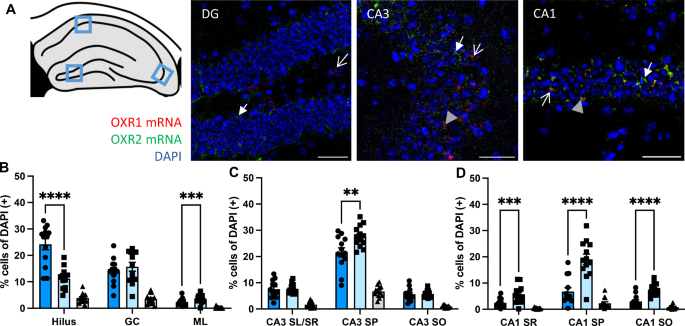
Orexins exist in two forms, orexin-A and orexin-B, which bind to two G-protein coupled receptors, OX1R and OX2R. The orexinergic system is primarily active during wakefulness, promoting alertness and suppressing REM sleep. It's a key component of the brain's "wakefulness switch." Consequently, blocking these receptors with antagonists logically leads to sedation, making ORAs a promising therapeutic target for insomnia. Unlike older hypnotics like benzodiazepines or Z-drugs, which broadly depress central nervous system activity, ORAs offer a more targeted approach by specifically dampening the wake-promoting signals. This mechanism theoretically leads to a more naturalistic sleep onset and maintenance, with potentially fewer of the cognitive side effects associated with earlier generations of sleep aids.
Drugs such as suvorexant, lemborexant, and daridorexant have demonstrated efficacy in clinical trials for chronic insomnia, offering a new avenue for patients struggling with sleep. However, their journey has also highlighted certain practical considerations. While generally well-tolerated, common side effects can include next-day somnolence, abnormal dreams, and even sleep paralysis. More importantly, the nuanced role of orexin in various physiological processes, from mood regulation to reward pathways, means that a broad blockade might have unintended consequences or simply not address the root cause of certain complex disorders. This brings us closer to understanding why a more holistic pursuit might be tempered.
Unpacking the "Orexin Timing Mismatch" Hypothesis
The concept of an Orexin Timing Mismatch emerges as a significant, albeit often implicit, challenge in the widespread application of ORAs. At its core, this hypothesis suggests that many sleep-wake disturbances aren't simply about an absolute excess of orexin activity, but rather about orexin's activity being asynchronous or dysregulated relative to the body's natural circadian rhythms and the desired behavioral state. Consider the following dimensions of this mismatch:
- Endogenous Circadian Disruption: Our internal biological clock, primarily governed by the suprachiasmatic nucleus (SCN), orchestrates the rhythmic release and activity of various neurotransmitters, including orexin. In conditions like shift work disorder, jet lag, or even certain psychiatric illnesses, this internal clock can become misaligned with the external environment or an individual's desired schedule. An "orexin timing mismatch" here means orexin neurons might be inappropriately active at times when the body is trying to wind down for sleep, or conversely, less active when wakefulness is required.
- Therapeutic Administration Challenges: Administering an ORA at a fixed time might effectively induce sleep, but it doesn't necessarily "reset" or correct the underlying circadian or neurological timing anomaly. If the problem is *when* orexin is active, simply blocking it might be a temporary fix rather than a lasting solution. For instance, if an individual's natural orexin peak is shifted later in the evening, taking an ORA might overcome this, but upon discontinuation, the mismatch could persist. This highlights the intricate connection between orexin and our internal clock. For a deeper dive into how disruptions manifest, consider exploring Orexin Knock-Outs: Understanding Behavioral Instability, which sheds light on the broader consequences of orexin system dysregulation.
- Nuanced Orexin Dynamics: Orexin's role isn't a simple "on/off" switch. Its activity is dynamic, influenced by stress, diet, light exposure, and social cues. A blanket pharmacological blockade might disrupt these intricate modulations, potentially leading to suboptimal outcomes or masking deeper issues. The challenge lies in distinguishing between an orexin system that is simply overactive and one that is active at the wrong biological time.
This nuanced perspective suggests that while ORAs are effective for symptomatic relief of insomnia, they may not address the underlying "timing error" that contributes to the problem, making them less suitable for broader application where such mismatches are the primary pathology.
Beyond Timing: Other Hurdles for Orexin-Based Therapies
While the Orexin Timing Mismatch offers a compelling perspective, other factors also contribute to the less-than-explosive expansion of ORA-based therapies:
- Specificity of Action vs. Broader Disorders: Orexin's role extends beyond just sleep-wake regulation. It modulates aspects of reward, pain, anxiety, and stress. While ORAs are excellent for dampening wakefulness, their utility in other orexin-implicated disorders like addiction or chronic pain is complex. For narcolepsy type 1, the condition is characterized by a *deficiency* of orexin neurons, meaning antagonists would be counterproductive; here, orexin *agonists* (which activate the system) are the desired therapeutic approach. This dichotomy means that research and development efforts are split, and the "antagonist" pathway isn't a panacea for all orexin-related conditions.
- Market Competition and Cost: The market for sleep aids is saturated with various options, including over-the-counter remedies, older generation hypnotics (many now generic), and cognitive behavioral therapy for insomnia (CBT-I). New ORAs, often with premium pricing, face an uphill battle to demonstrate superior long-term benefits and cost-effectiveness over established treatments, especially for less severe cases.
- Patient Variability and Phenotyping: Not all insomnia is created equal, nor are all patients. Individual differences in metabolism, circadian rhythmicity (chronotypes), and underlying pathophysiology mean that a single ORA might not be universally effective. A lack of precise biomarkers to identify which patients would best respond to an ORA (or indeed, whose insomnia is rooted in an Orexin Timing Mismatch) can hinder broader adoption.
- Understanding the Full Orexin Landscape: The orexin system is still being actively researched. Its complex interactions with dopamine, serotonin, noradrenaline, and histamine systems mean that isolating and modulating just one component can be challenging. A comprehensive understanding of these interactions is crucial for developing therapies that are both effective and safe across a wider range of conditions.
Future Directions and Precision Medicine in Orexin Research
Despite these challenges, the orexin system remains a fascinating and highly promising target for future therapeutic interventions. Overcoming the hurdles, particularly the implicit challenge of the Orexin Timing Mismatch, will likely involve a multi-pronged approach:
- Personalized Medicine: Developing diagnostics that can identify specific orexin dysregulations, including timing mismatches or differential receptor involvement (OX1R vs. OX2R activity), could pave the way for more tailored ORA treatments. This might involve assessing an individual's chronotype, lifestyle, and even genetic predispositions to predict response.
- Novel Pharmacokinetics: Exploring ORAs with different half-lives or formulations that allow for more precise timing of drug action could help mitigate the "timing mismatch" effect. For example, a drug that rapidly induces sleep but clears quickly might be ideal for those with initial insomnia, while a longer-acting variant might suit those with maintenance issues.
- Combination Therapies: Combining ORAs with other interventions, such as light therapy (to correct circadian misalignment) or behavioral therapies, might offer a more comprehensive solution than pharmacology alone.
- Agonist Development: Renewed focus on orexin agonists for conditions like narcolepsy type 1, as well as novel dual-action compounds, could broaden the therapeutic scope of orexin-based drugs. Significant progress is being made in this area, offering hope for conditions requiring orexin *activation* rather than antagonism. For a broader overview of the exciting developments in this field, consider reading about Advances in Orexin Therapy: Updates on New Treatments.
Conclusion
The journey of orexin receptor antagonists from discovery to clinical application has been marked by both profound successes and complex challenges. While offering a valuable tool for treating insomnia, their wider pursuit as a therapeutic class appears to be tempered by the nuanced nature of the orexinergic system itself. The concept of an Orexin Timing Mismatch, where the issue is not just the quantity of orexin activity but its temporal misalignment, presents a significant hurdle that current broad-spectrum antagonists may not fully address. As our understanding of orexin continues to deepen, and as precision medicine becomes more sophisticated, we can anticipate a future where orexin-based therapies are more precisely targeted, addressing specific timing mismatches and leveraging the full potential of this remarkable neuropeptide system.